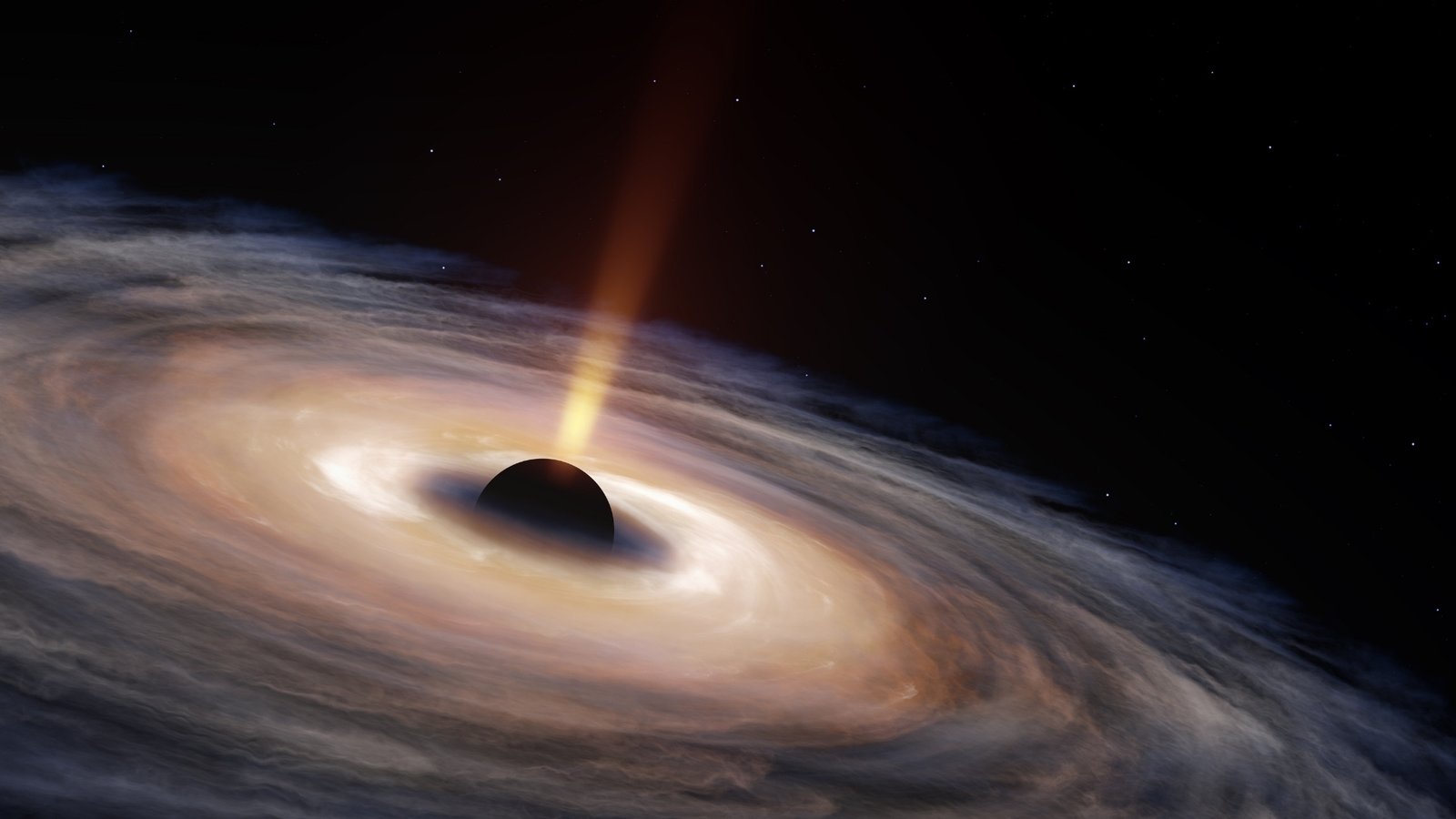
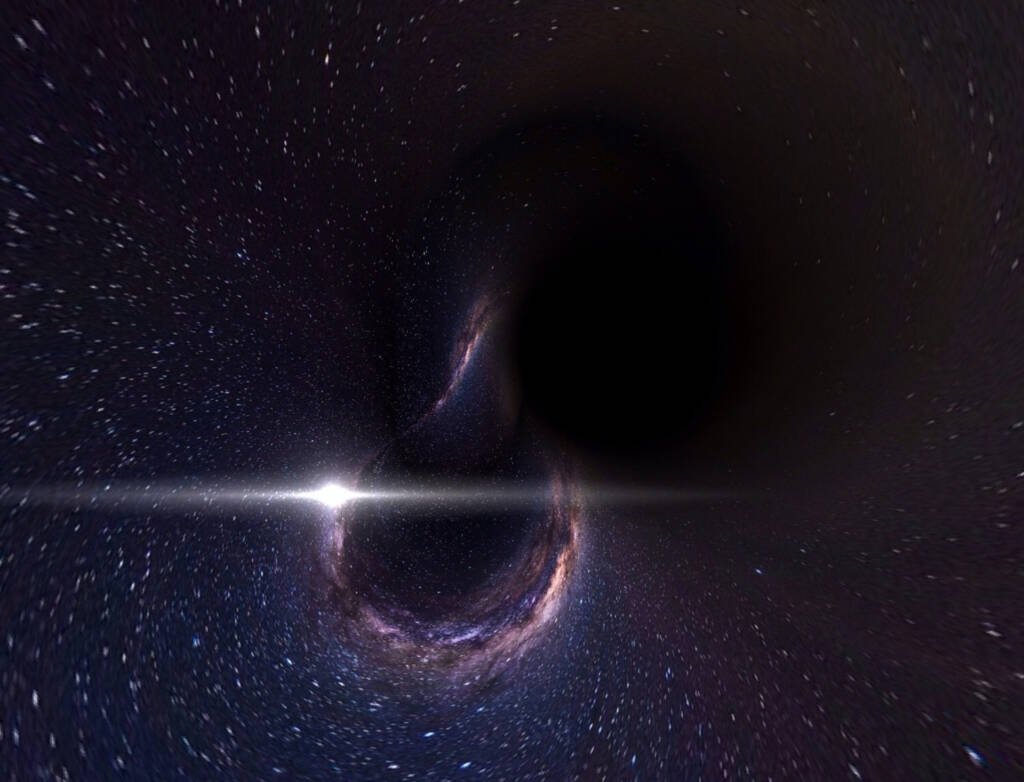
Imagine drifting silently through space. No sound, no motion, no warning. Then you cross an invisible line — the event horizon — and the universe you knew is gone.
From the outside, nothing marks this boundary. There is no wall, no alarm. But physics has changed around you in a way that cannot be undone.
What Is a Black Hole?
Before we follow you into one, it helps to understand what a black hole actually is — because the popular image of a cosmic vacuum cleaner sucking everything in is not quite right.
A black hole forms when a massive star reaches the end of its life. After burning through its fuel for millions of years, the star can no longer support its own weight. Its core collapses inward in a fraction of a second, triggering a supernova explosion. What remains is an object so dense that its gravitational pull overwhelms everything — including light.
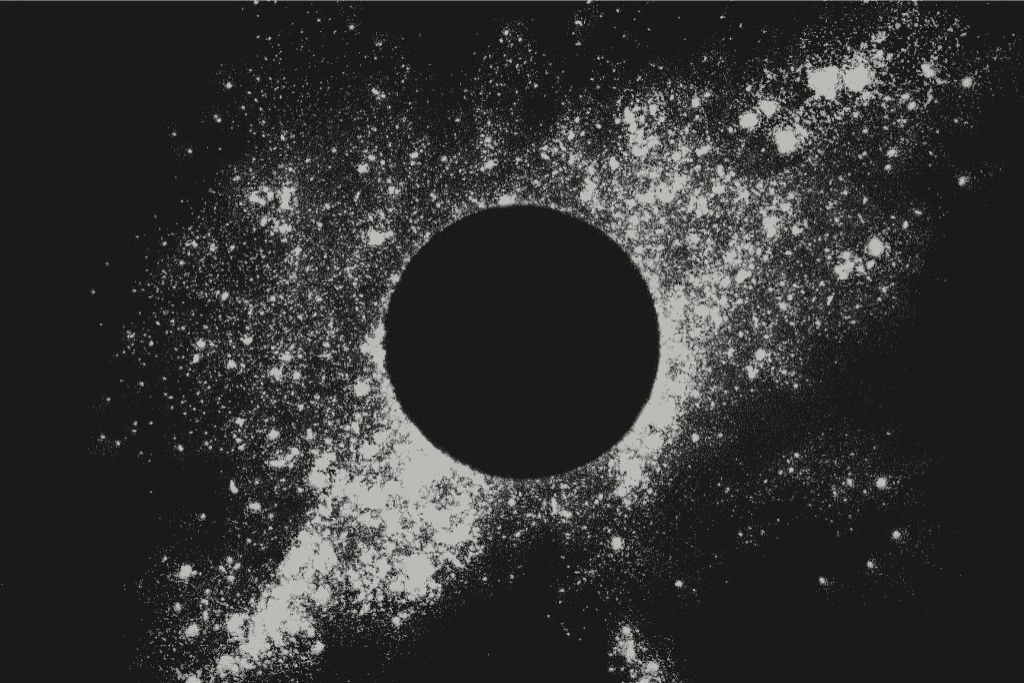
That last part is what makes a black hole a black hole. Not its size. Not its age. The fact that not even light, the fastest thing in the universe, can escape from it.
The boundary where escape becomes impossible is called the event horizon. Cross it, and you are not coming back.
Gravity Becomes Personal
As you fall deeper, gravity stops pulling you evenly. Your feet, slightly closer to the centre, feel a stronger pull than your head. The difference grows slowly, then relentlessly — stretching you lengthwise while compressing you sideways.
Scientists call this spaghettification. And yes, that is the actual term used in physics literature.
Time Stops Agreeing with Everyone
To someone watching from a safe distance, you appear to slow down, freeze at the edge, suspended forever at the horizon. But from your perspective, time continues normally. You cross the boundary and keep falling.
The black hole teaches us that space can be crumpled like a piece of paper into an infinitesimal dot.
Kip Thorne
Both experiences are real. They are a direct consequence of how gravity warps time — something Einstein described in general relativity and which has been confirmed by experiment many times since.
Where Physics Runs Out
At the centre lies the singularity — a point of infinite density where our equations simply stop working. The laws governing planets, atoms, and light no longer apply.
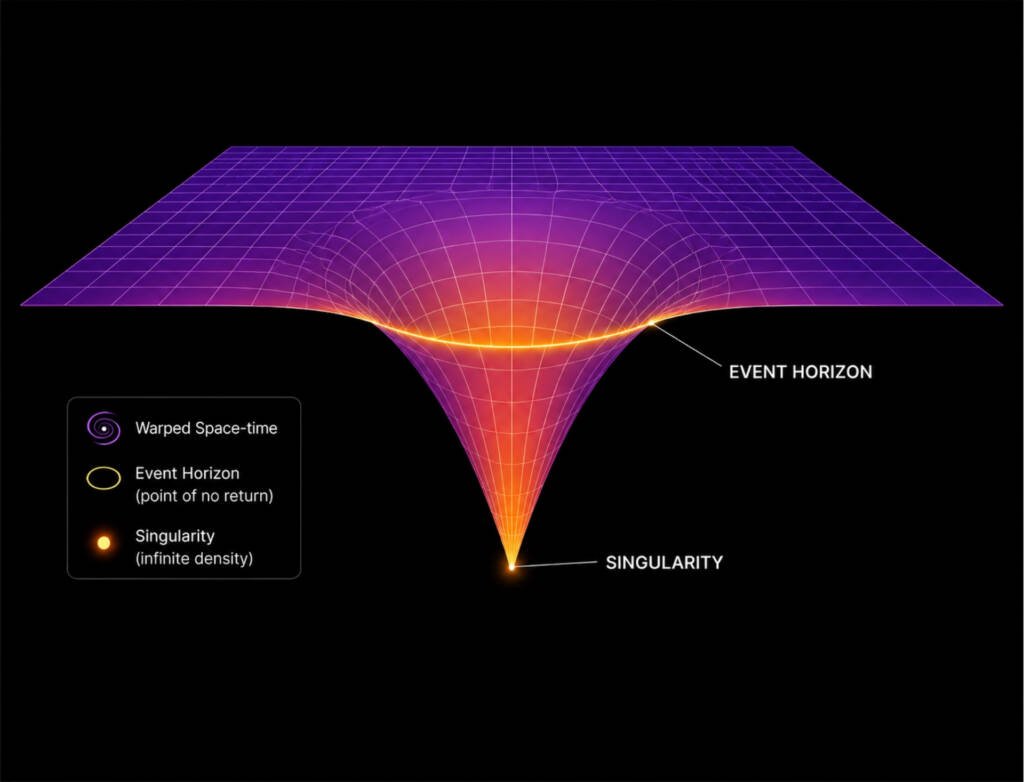
This is not a failure of science. It is an open door. The singularity is where our current understanding ends and something deeper is waiting to be discovered. A complete theory of quantum gravity would likely replace the singularity with something stranger and more precise. We just have not built that theory yet.
What Black Holes Have Already Taught Us
In 2019, the Event Horizon Telescope captured the first real image of a black hole — a shadow against glowing gas, exactly as general relativity predicted. In 2015, gravitational waves were detected for the first time, produced by two black holes colliding billions of light years away.
We are no longer theorising about black holes from a distance. We are observing them directly.
Black holes are not just the universe’s most extreme objects. They are the places where the biggest questions in physics live — about time, gravity, information, and the true structure of reality.
And every time we study one, we get a little closer to answering them.